GNSS RTK
What is RTK?
Last updated 5 months ago
RTK is one of the high-precision geolocation systems compatible with SonarVision. It is a highly accurate GPS receiver that can pinpoint your location to within 1 meter and connects to the app via Bluetooth.
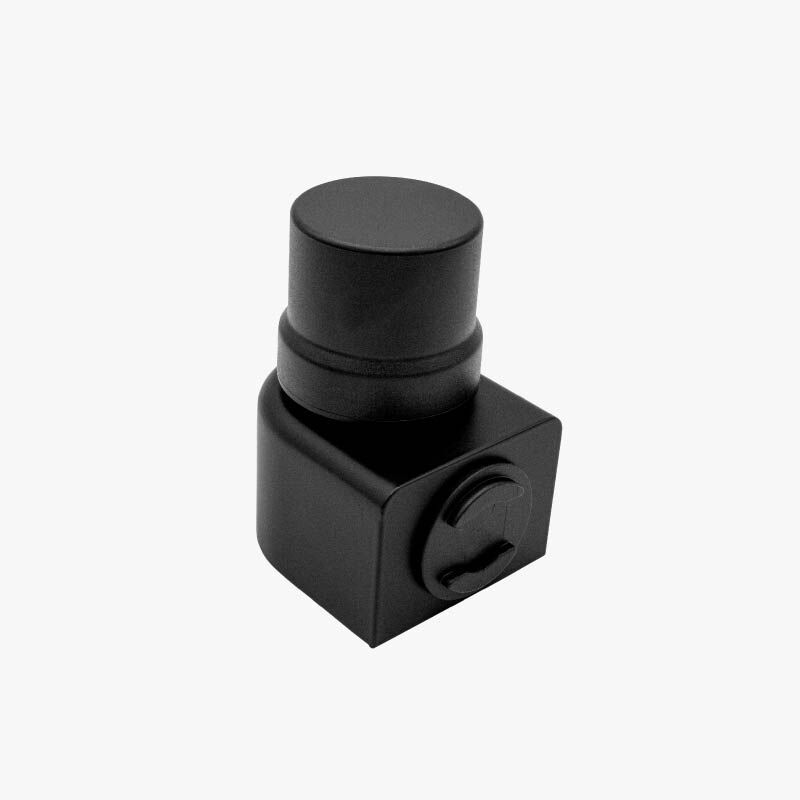
If you’re looking for more information on how to connect an RTK to SonarVision, or how to get one, read: Obtenir ou assembler un RTK Ardusimple
Here is a demonstration by an SonarVision user:
Centipede Network Availability
The Centipede network covers most of mainland France, certain overseas territories, and a few other regions around the world. The SonarVision app automatically connects to the nearest active RTK base station.
You can visit the official card to view existing stations worldwide.
More information
Here are a few paragraphs to help you better understand this system.
What is GNSS?
First of all, GNSS stands for “Global Navigation Satellite System,” commonly referred to as GPS in everyday language. GPS is actually the U.S. satellite constellation, the Global Positioning System, orbiting the Earth alongside the European (Galileo), Chinese (Beidou), and Russian (GLONASS) constellations.
GPS (i.e., GNSS) receivers are generally capable of receiving signals from all these constellations. However, depending on their antenna, microchip, the algorithms used, and the environment, their accuracy can vary significantly.
For example, with an iPhone 13, in an open area like a park, accuracy ranges from 3 to 10 meters. In contrast, in a narrow alley lined with 10-story buildings, accuracy is typically between 10 and 50 meters. This is because the GPS antenna can only “see” satellites in a direct line of sight through a narrow strip of sky between the two buildings, and signals from other satellites arrive after bouncing off the building facades one or more times: this is known as the canyon effect.
The iPhone 13 is equipped with a basic antenna that detects only one frequency transmitted by satellites—the L1 frequency. However, there are “multi-band” antennas capable of simultaneously detecting multiple frequencies from the same satellite. With a specialized chip and algorithms, it is then possible to determine if a signal has bounced off a wall before reaching the antenna and thus ignore it. These receivers are commonly referred to as “dual-band” and are found in many consumer devices such as the iPhone 14 Pro and higher models or certain smartwatches. In terms of accuracy, this significantly reduces inaccuracies caused by the canyon effect and, in practice, allows for accuracy of less than 5 meters, even in urban areas.
Is it therefore possible to achieve meter-level, or even centimeter-level, accuracy with a GPS system—a capability so valuable for pedestrian navigation? Well, yes, ever since the invention of the RTK system with corrections.
What is RTK?
RTK stands for Real-Time Kinematics. It is an advanced technique that allows you to measure your position with a theoretical accuracy of 1 to 2 centimeters. In practice, however, the waves from the satellites are deflected by the ionosphere, a very high layer in the atmosphere, which disrupts the measurements taken by the receiver and limits the accuracy of a single RTK to around 5 meters…
However, physics has a nice surprise in store for us: between two points 10 kilometers apart, these disturbances are virtually identical and remain very similar up to 50 kilometers. The ingenious designers of the RTK therefore came up with the idea of using a first fixed RTK, placed at a well-known GPS coordinate and called the “base,” and using it to correct the measurements taken by another mobile RTK, mounted for example on a tractor, and called the “rover.” If the base detects that it is 5 meters too far north, it transmits a correction via the internet to the rover, which can then correct itself by 5 meters to the south. The result: positional accuracy of about 1 centimeter.
This technology was initially widely used in precision agriculture, allowing farmers, for example, to drive a tractor year after year along the same furrows without compacting the soil too much. Initially, these antennas cost between €15,000 and €25,000, and a subscription to a correction network could cost up to €1,000 per year.
In recent years, companies like u-blox have been marketing much cheaper RTK chips, making it possible to build more affordable receivers for just a few hundred euros. French farmers have embraced this technology and created a free, open network called “Centipede” that provides corrections at no cost.
All that remains is to develop guidance applications capable of using them!